
04.11.2026
Among all the protective prayers of the Muslim world, few have carried the weight of one short litany born in the middle of the Red Sea nearly eight centuries ago. Sailors stitched it into their clothing. Travellers recited it before setting out. It was carried into difficulty on land and at sea, prized as a shield against danger. Its name is Hizb al-Bahr, the Litany of the Sea.
To understand what is Hizb al-Bahr, we need to trace three things: the story of its origin, a vision granted to a great Sufi master during a sea voyage; its content, a weave of Quranic verses, divine names and the mysterious letter-openings of the surahs; and the reason it was carried for centuries as protection. This article tells the story of this famous litany drawing exclusively on Arabic, Persian and Urdu sources.
Hizb al-Bahr is a hizb, a structured litany, composed by Imam Abu al-Hasan al-Shadhili, who died in 656 AH (1258 CE) and founded the Shadhili Sufi order, one of the most widespread paths in the history of Islam. As we explained in our guide to the difference between ruqyah, hizb, wird and taweez, a hizb is a structured arrangement of Quranic verses, divine names and supplications, usually composed by a spiritual master for his followers.

The author of Kashf al-Zunun records that it is also known as al-Hizb al-Saghir, the Smaller Litany, and that it opens with the words Ya Allah, Ya Ali, Ya Azim, Ya Halim. The full Hizb al-Bahr meaning can only be grasped by looking at what it contains: Quranic verses chosen for journeys and protection, a series of the beautiful names of Allah, and the mysterious fawatih, the disconnected letters that open certain surahs of the Quran, such as ha mim ayn sin qaf and kaf ha ya ayn sad. It is, in short, a carefully composed shield woven from the most powerful elements of the Quran.
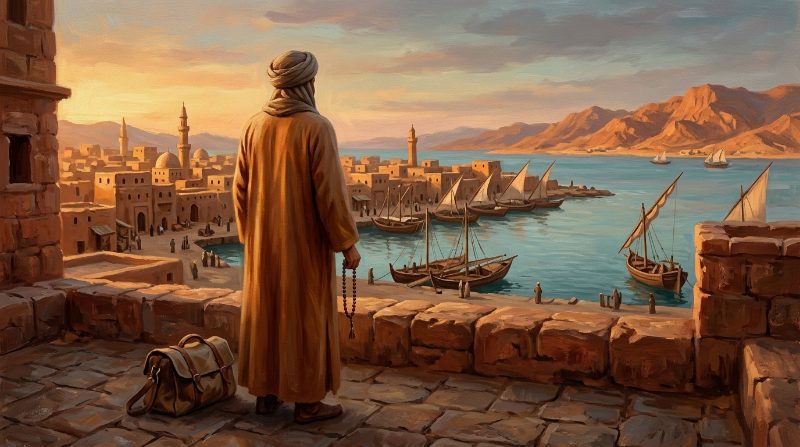
The Hizb al-Bahr story is among the most striking origin accounts of any Islamic litany. The Arabic sources relate that Imam al-Shadhili was travelling across Bahr al-Qulzum, the Red Sea, when the events that gave the litany its name took place.
According to the account preserved across several sources, the Imam set out on a sea voyage, by some narrations on his way to perform the Hajj, in the company of a Christian travelling companion. After they had crossed some distance, the winds died away completely and stayed still for several days, leaving the ship becalmed and the journey halted. It was then that Imam al-Shadhili saw the Prophet (peace be upon him) in his sleep, who gave him glad tidings and taught him words, verses and supplications of deliverance. He recited them, the winds returned, and the ship sailed on. By one narration, the Christian companion, astonished at what he had witnessed, accepted Islam.

The connection of the name to Imam al-Shadhili Hizb al-Bahr was explained by the scholar Ahmad Zarruq in his commentary. He wrote that it is called the litany of the sea for several reasons: because it was composed in and for the sea, because the events that gave rise to it happened at sea, because it mentions the seas by name, and because it is itself a sea in its knowledge and its secrets. He added that a single one of its letter-openings contains oceans of meaning, recalling the saying of Ali that, were he to wish, he could load seventy camels with the meanings of kaf ha ya ayn sad alone.
Hizb al-Bahr weaves together three kinds of sacred material, and understanding them is the key to understanding why it was so valued. The first is Quranic verses, chosen especially for travel, deliverance and the subjugation of the elements. The litany asks Allah to subdue the sea for the traveller as He subdued the sea for Musa, drawing directly on the Quranic account of the parting of the waters.
The second element is the divine names. The litany opens by calling upon Allah through His names: Ya Ali (the Most High), Ya Azim (the Magnificent), Ya Halim (the Forbearing), placing the reciter in a posture of seeking refuge through the attributes of God.
The third and most distinctive element is the fawatih, the disconnected letters. Zarruq's commentary explains that ha mim ayn sin qaf carries the meanings of protection, care, safety and endurance. He records the tradition that whoever ties their fingers while reciting these letters and then enters upon someone they fear will find them a fortress and a source of acceptance, and that adding the verse "Allah will suffice you against them, and He is the Hearing, the Knowing" makes it a wondrous secret. The Shadhili litany protection tradition holds that these letters are repeated three times, because the Sunnah of dhikr is in threes, a principle we explored in our article on why some Quranic verses are repeated in taweez. Surah al-Mulk, too, is invoked in the same spirit, described as walls and a fortress against enemies.
The scholars and knowers of the Shadhili path recorded a great many virtues and functions for this litany, and the list of Hizb al-Bahr benefits is long. The Arabic sources mention repelling harm and drawing good, the treatment of magic (sihr) and spiritual affliction, the gaining of love and favour, victory over an enemy and recourse against an oppressor. This breadth of function is precisely why Hizb al-Bahr for protection became one of the most carried litanies in the Muslim world.
Ahmad Zarruq added an important principle in his commentary: what one achieves through this litany depends on intention (niyyah) and resolve (himmah). The reciter directs their intention toward the lawful aim they seek at the point of reciting "and subdue for us this sea." The litany, in other words, is not a mechanical formula but a focused act of supplication shaped by the sincerity of the one who recites it.
As a Sufi prayer for travel, its timing was also defined by the tradition. The Shadhili masters favoured reciting it after the Asr prayer, a timing attributed to Ibn Ata Allah al-Sakandari on the authority of Abu al-Abbas al-Mursi, and for the fullest benefit they recommended reciting it three consecutive times in one sitting. So valued was it that it was not only recited daily but written down and carried, which is where its story meets the tradition of the taweez.
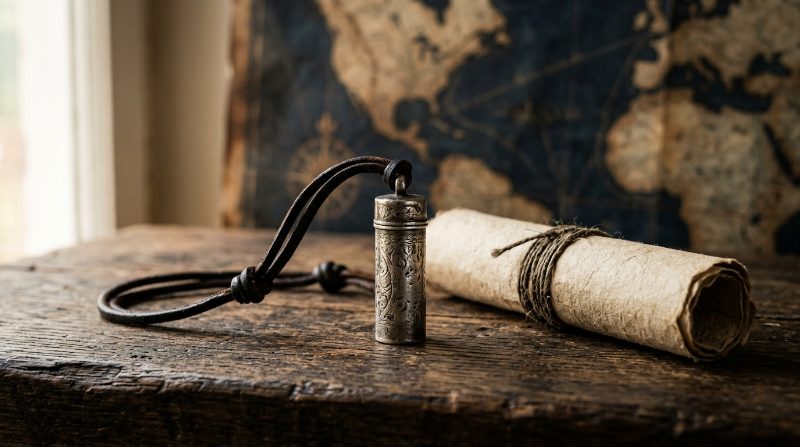
Hizb al-Bahr is a perfect illustration of how spoken protection and written protection meet. It was a litany prized so highly that it was not only recited but written down and worn, carried into travel and danger as a shield. The very same elements that fill the litany, the Quranic verses, the divine names and the letter secrets, are the elements that fill an authentic taweez, as we explored in our article on why Persian scholars called taweez naqsh.
For those who seek protection in travel or against magic in the same tradition, a written taweez carries the same heritage. Every taweez at taweez.co.uk is written in this classical tradition: you can see it in our handwritten taweez for nazar, in our taweez against enemies for victory and defence, and in our 99 Names of Allah taweez, built on the very divine names that open Hizb al-Bahr.
Author: Salam Burdu
Salam Burdu is an Islamic scholar and lecturer from Pakistan who is known for his expertise in the field of Islamic spiritual healing and protection.